

Turning Challenges into Opportunities: Multicultural Teams
In many industries, the employment of multicultural teams is growing in numbers and diversity. Today, companies spanning multiple jurisdictions should consider their multicultural teams as the backbone of resilient operations across time zones, ports, tarmacs, and cargo hubs.
As passenger and freight volumes grow, operators from airlines to deep‑sea lines must pool talent from a mix of nationalities, languages, and work cultures to boost safety, innovation, and commercial agility. Yet, integrating these multicultural teams comes with friction: communication breakdowns, varying conceptions of hierarchy, and different approaches to risk and compliance. The question for HR aviation, Maritime HR, and logistics HR is not whether to build diverse teams, but how to turn those tensions into structured advantage.
 Why Multicultural Teams Matter
 Why Multicultural Teams Matter
As global passenger and freight volumes keep on rising, with more long haul routes and complex trade corridors tied to emerging market growth. To wit, flight crews, port supervisors, and trucking operations managers routinely work alongside colleagues from dozens of cultures. This is especially evident when considering popular talent pools; such as Southeast Asian seafarers to Eastern European ground handlers and African‑based freight coordinators.
In aviation and maritime, this mix is already a competitive differentiator: airlines such as Singapore Airlines and institutions like IATA frame inclusive culture as a safety and service lever, not just a CSR add on. For HR teams across the aviation, maritime and transport industries, diverse teams have come to mirror the markets operators serve. In turn, they can adapt faster to local regulations, customer expectations, and crisis scenarios such as fuel‑price spikes or geopolitical disruptions.
In trucking and logistics, for example, a multicultural teams‑driven workforce can navigate regional customs, language barriers, and union cultures more smoothly, reducing detention time at borders and improving on‑time delivery KPIs.
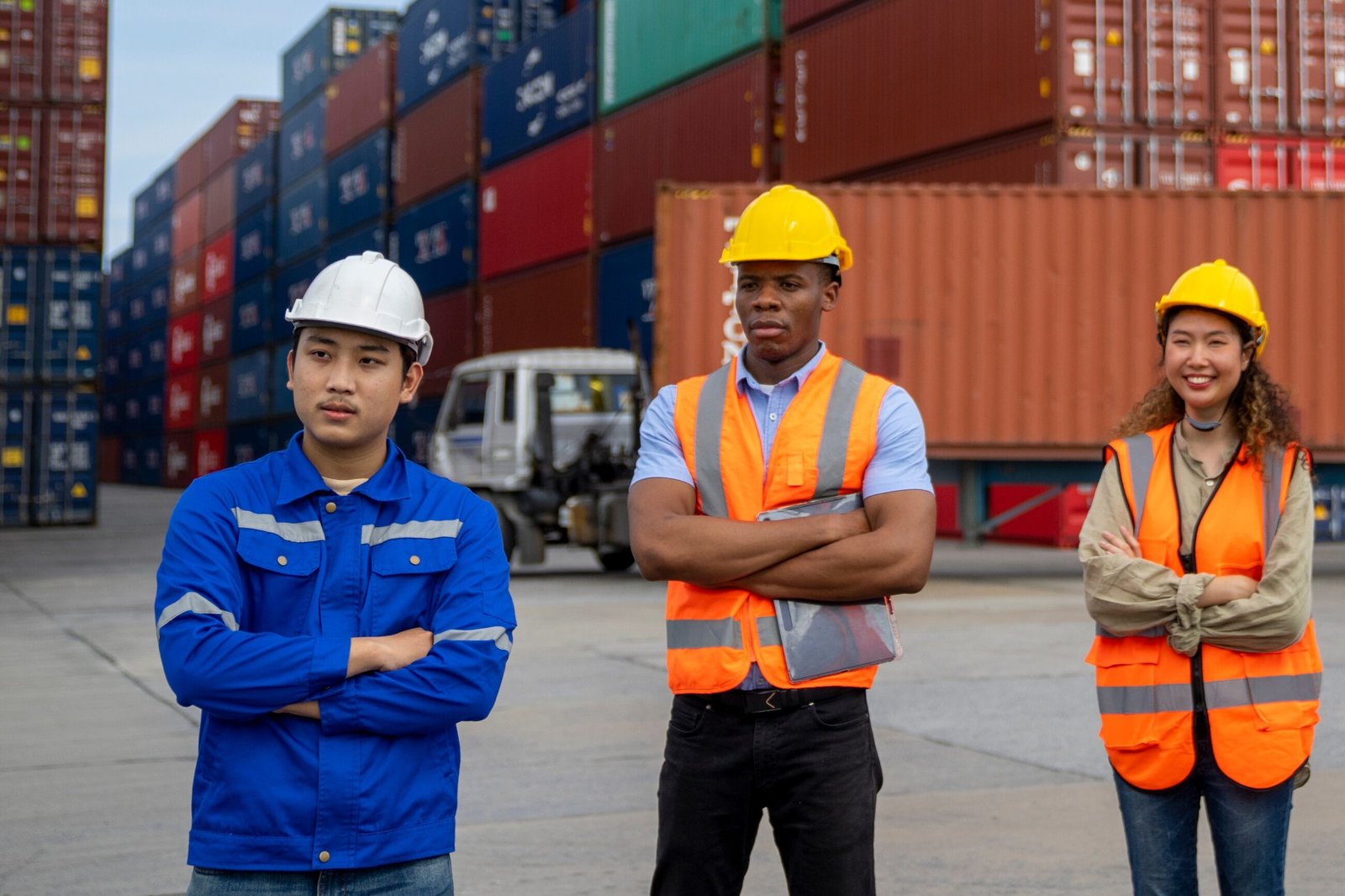
Core challenges Multicultural Teams Face
Communication and operational safety
In aviation and maritime, small misunderstandings can escalate into major safety threatening events. A 2023 study on cockpit communication cited that language‑related difficulties were a factor in roughly 10% of medium‑risk incidents, even when English was the mandated language. Similar findings appear in maritime research, where port‑state control inspections still flag miscommunication in multicultural crews as a recurring theme.
In trucking and logistics, drivers and dispatchers speaking different native tongues may interpret “urgent” or “high‑risk” differently, affecting how they handle hazmat or perishable cargo. For logistics HR, that means training, reporting, and incident‑review systems must be designed explicitly for low‑language‑proficiency clarity, not just for legal box‑ticking.
Clashes in work culture and hierarchy
Many maritime and aviation cultures are traditionally hierarchical, with clear senior/junior boundaries in cockpits and engine rooms. By contrast, tech driven aviation and logistics environments increasingly reward flat, collaborative decision‑making. When a senior engineer from a traditionally top‑down culture is paired with a junior data analyst from a feedback heavy background, role expectations can clash without deliberate design.
For HR aviation professionals, this tension shows up in safety reporting trends. In fact, in some fleets, junior staff from high power distance cultures are less likely to challenge senior colleagues, even when they spot hazards. In maritime, similar patterns surface in safety drill debriefs and whistleblowing statistics. In trucking, cultural differences in punctuality, overtime norms, or union engagement can directly affect rostering and fatigue‑risk‑management models.
 Integration and retention in global operations
 Integration and retention in global operations
 Despite the value of multicultural teams, turnover remains a pain point. A 2025 World Economic Forum outlook on aviation sustainability noted that crew and technical turnover is rising in the Middle East and Asia‑Pacific, at least partly due to mismatches between corporate culture and local expectations around work life balance and career progression. In maritime, recent reports describe a growing “crew‑change crisis,” where multicultural crews struggle with visa regime fluxes and inconsistent support from shore‑side Maritime HR teams.
From low cost carriers to global container lines, companies that manage multicultural teams well report higher customer satisfaction scores in cross border markets. Singapore Airlines, for example, explicitly links its cabin‑crew diversity to its premium service reputation, while tech‑driven logistics firms use multicultural operations teams to tailor last mile delivery and customs messaging by region.
For logistics operators, satellite‑fleet and cross‑border trucking companies report that drivers from certain regions feel isolated if HR policies are not adapted to their family support and remittance needs. This matters to stock‑market speculators as well: labor stability indicators are increasingly used as leading proxies for operational risk across aviation and shipping equities.
 Opportunities multicultural teams unlock
 Opportunities multicultural teams unlock
Better innovation and problem solving
Recent research and data show how multicultural teams solve complex operational problems faster than culturally homogeneous ones, provided that communication is structured and psychological safety is high.
In aviation, multicultural maintenance and operations teams at integrated airport technology have been credited with redesigning resource management and baggage handling workflows that cut process latency by double digit percentages across several hubs. For HR aviation and logistics HR, this translates into a cross‑functional, multicultural melting pot. Notwithstanding the constant need for turnaround‑time optimization, slot coordination bottlenecks, and cargo flow simulations.
Stronger risk‑management and compliance
Multicultural crews often bring diverse perceptions of risk and compliance, which, when aligned, lead to more robust safety and regulatory frameworks. In aviation, multicultural flight deck crews can mirror a wider range of regulatory cultures and thereby reduce blind spot errors when properly trained. In the maritime industry, mixed‑nationality crews have helped flag non compliance with local ballast water or emissions rules that single‑nationality teams might miss.
Specifically to Maritime HR, designing compliance training and audits as dialogue driven exercises can lead to early risk detection. Key elements to address critical aspects of shipping and maritime management include safety management systems, personnel competency, navigational safety, environmental and security management, along with human performance and continuous improvement through self-assessment. In turn, this should help companies identify operational gaps, set targets, and implement action plans to maintain high standards in multicultural maritime operations.
Conclusion: How to turn multicultural teams into sustained advantage
 Conclusion: How to turn multicultural teams into sustained advantage
Employing multicultural teams while delivering real value, HR and leadership teams should focus on three levers. First, standardizing core safety and communication protocols in plain‑language modules, then layering them with culture‑specific coaching, especially for aviation HR and Maritime HR.
Second, HR teams should design career‑paths and incentive structures that respect different cultural expectations around authority, tenure, as well as family‑centric time‑off. Subsequently, HR procedures should feel fair rather than foreign and imposed. Third, HR teams should measure and publish diversity linked KPIs, from incident‑reporting rates to crew‑change‑success ratios, to show investors that multicultural teams are not just a social good asset but a resilience and innovation engine.
In the end, the most forward‑looking aviation, maritime, and transport companies won’t treat multicultural teams as a challenge to manage, but as a cockpit‑ready, bridge‑ready, and dispatch‑ready competitive advantage.
